Strategic Equilibrium in Poker: Multi-Table Sessions Meet Progressive Jackpot Dynamics
Mia Brooks · Aug 13, 2026

Strategic Equilibrium in Poker: Multi-Table Sessions Meet Progressive Jackpot Dynamics
Data from gaming operators shows that multi-table poker sessions require precise time allocation when progressive jackpot accumulation rates influence overall session value, since jackpot growth occurs at fixed percentages of rake or entry fees across networked poker rooms. Observers note that players often divide attention between four to eight tables while monitoring jackpot meters that climb steadily during peak hours, creating a need for real-time decision frameworks that weigh immediate hand equity against potential jackpot triggers such as bad beat payouts or royal flush bonuses.
Core Mechanics of Multi-Table Poker Operations
Multi-table poker involves simultaneous participation across several virtual or physical tables, where software platforms track hand histories and allow quick seat changes, yet each additional table reduces per-hand decision time and increases cognitive load. Research indicates that experienced participants maintain win rates by using heads-up displays and hotkey setups that compress action sequences, while accumulation rates for progressive jackpots depend on total rake contributed by all participants in a given network or casino floor. Those who study session logs find that jackpot meters typically advance between 1 and 5 percent of collected rake, with carry-over amounts from prior periods pushing totals higher during extended promotional windows.
Progressive Jackpot Accumulation Patterns
Progressive systems pool contributions across multiple sites or properties, and figures reveal that daily increments average several thousand dollars in high-traffic regions, although spikes occur during weekend volume surges. According to industry reports from the Nevada Gaming Control Board, jackpot growth correlates directly with table hours and average pot sizes, meaning players who sustain longer multi-table runs indirectly accelerate meter progress through sustained rake generation. Yet the probability of hitting a qualifying hand remains low, so the decision to stay in a session often hinges on current meter size relative to personal bankroll thresholds rather than expected value calculations alone.
Time Allocation Frameworks
Participants frequently apply session timers that cap continuous play at two to three hours before mandatory breaks, allowing periodic review of jackpot meters without sacrificing table count. Data shows that breaks coincide with meter checks because accumulation continues during offline periods, and returning players can adjust table numbers based on updated totals. One documented case involved a group of regulars who reduced table load from six to four once a bad beat jackpot crossed a pre-set threshold, thereby preserving focus for the higher-stakes hands that trigger payouts.
Bankroll and Variance Considerations
Bankroll management models incorporate both standard poker variance and the rarer jackpot variance, since hitting a progressive award can offset weeks of small losses yet occurs infrequently enough that most sessions end without payout. Studies from academic gaming research centers indicate that players who allocate separate reserves for jackpot pursuits maintain longer overall careers, because the dedicated portion absorbs the cost of extended multi-table grinding without depleting primary playing funds. Software tracking tools now include jackpot probability estimators that factor current meter size, number of eligible tables, and historical trigger frequency, giving users quantitative inputs for session length decisions.
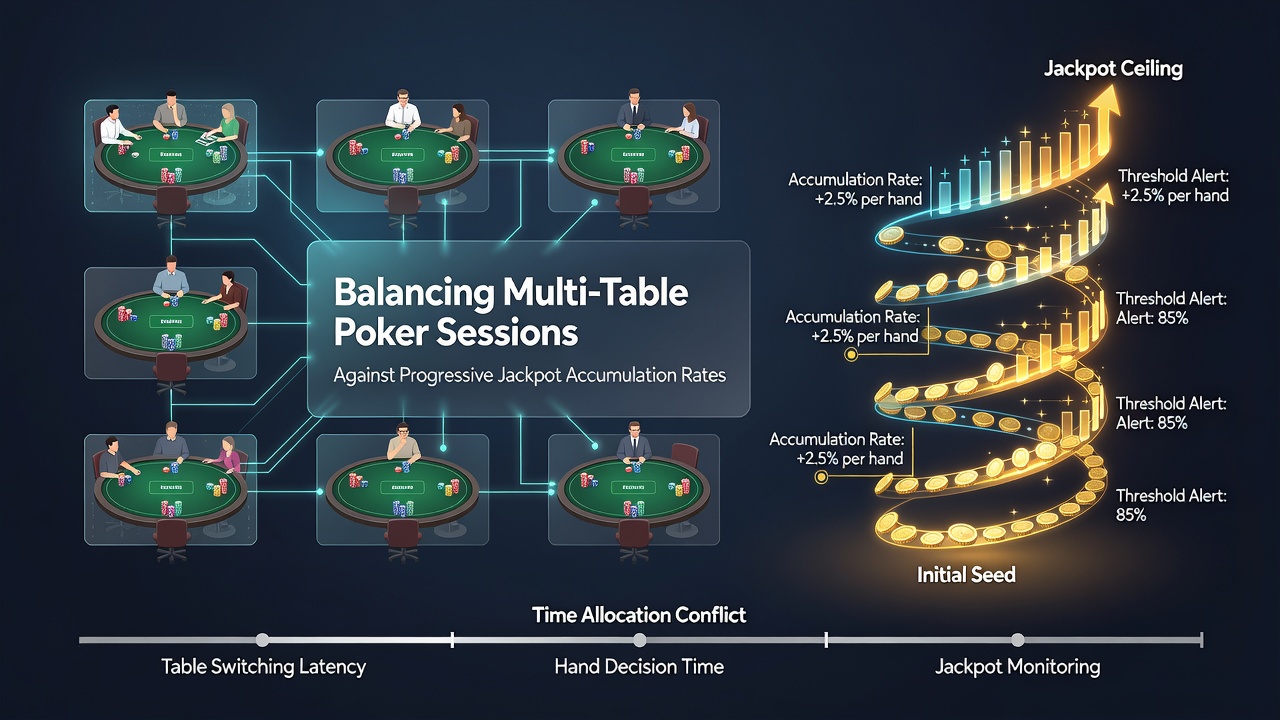
Network-wide promotions scheduled for August 2026 are expected to increase contribution percentages temporarily, which will accelerate meter growth and alter the break-even points for multi-table participants who chase these specific jackpots. Regulatory filings confirm that such limited-time adjustments have historically drawn higher table counts during the affected weeks, creating feedback loops where more players contribute to faster accumulation while simultaneously competing for the same prize pool.
Software Tools and Tracking Systems
Modern poker platforms integrate jackpot meter APIs that update in real time within the client interface, allowing seamless monitoring without leaving the table lobby. Those who utilize custom scripts often overlay meter velocity graphs that predict when a jackpot will reach target levels based on recent rake trends, thereby informing whether to add tables or reduce them. External data aggregators compile cross-site statistics that reveal regional differences in accumulation speed, helping players select networks where meters move quickest relative to their preferred game types.
Conclusion
Balancing multi-table volume against progressive jackpot accumulation ultimately reduces to measurable inputs: current meter size, contribution rate, personal table capacity, and historical trigger frequency. Operators continue to refine tracking dashboards that present these variables in unified views, while participants refine personal algorithms that translate meter data into table-count adjustments. The interplay between steady rake generation and infrequent large payouts remains a central feature of networked poker environments, with documented session data providing the factual basis for ongoing strategy refinement across different regulatory jurisdictions.